
Agricultural Fairs & Exhibitions
Agricultural fairs and exhibits are educational, fun, and important to North Carolina's culture. At fairs, we can celebrate agricultural workers and animals. It is important to stay safe at fairs to prevent getting sick from animals. Below you will find information about how to stay safe at fairs and exhibits.

In 2005, the North Carolina General Assembly passed Aedin’s Law, which provides protection to the public while in animal exhibits at agricultural fairs. North Carolina was the first state to have a specific law for this topic. The first National Association of State Public Health Veterinarians (NASPHV) Compendium on this topic was created around the same time as Aedin's Law. Both Aedin's Law and the Compendium were created largely in response to an E coli outbreak in 2004 at a fair petting zoo.
Information for Agricultural Fair Organizers & Exhibitors
Take Action to Prevent Spread
CDC Information for Agricultural Fair Exhibitors
Recommendations to Minimize Influenza Transmission at Dairy Cattle Livestock Exhibitions (usda.gov)
Reducing Risk for People Working with or Exposed to Animals
NCDA: Recommendations to Minimize Influenza Transmission at Dairy Cattle Livestock Exhibitions
Information for General Public
Prevention & Safety:
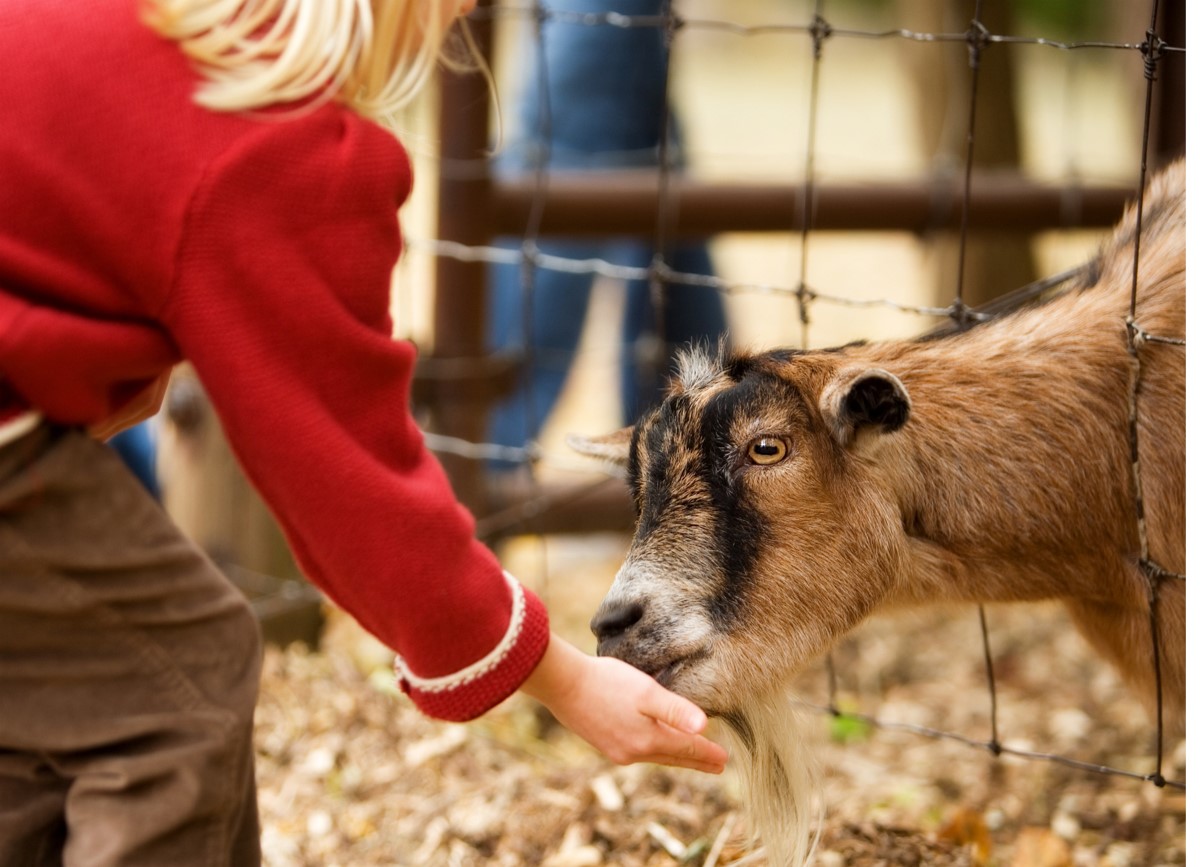
Here are some important safety tips for visitors at agricultural fairs:
- Wash Your Hands:
- Before eating, drinking, or preparing food.
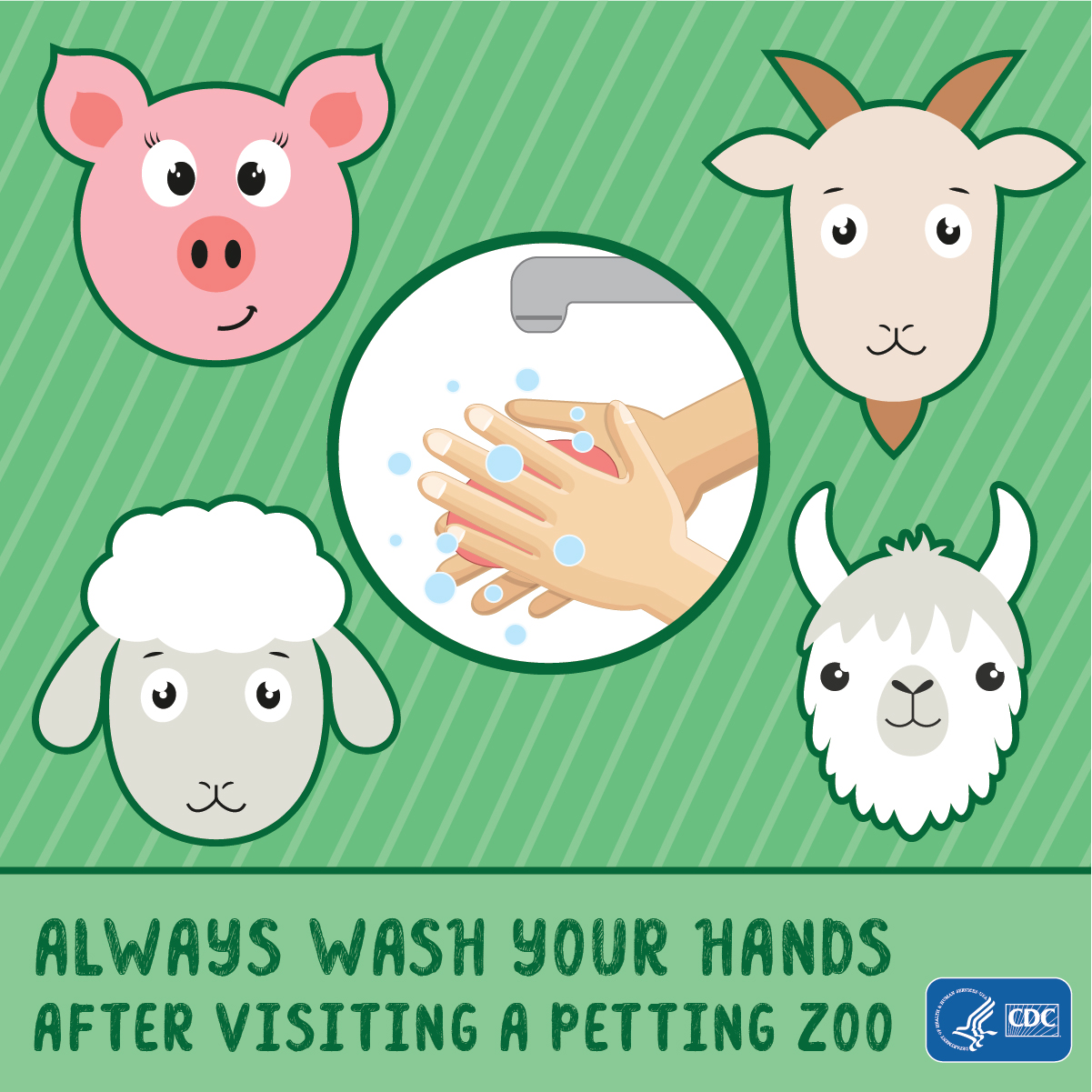
- After petting animals or being around animal areas.
- Supervise children’s hand washing.
- Avoid Eating or Drinking in Animal Areas:
- Keep food and beverages away from animal enclosures to prevent contamination.
- Keep Personal Items Clean:
- Wash clothing after visiting animals.
- Keep young children’s toys, pacifiers, and blankets outside of animal interaction areas.
- Avoid Contact with Raw Milk:
- Avoid splashes.
- Wash hands after milking animals.
- Don’t drink raw milk.

Print Ready Materials
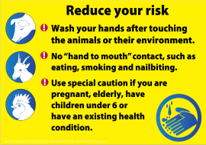
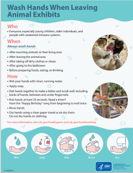
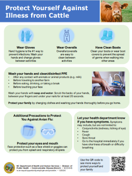
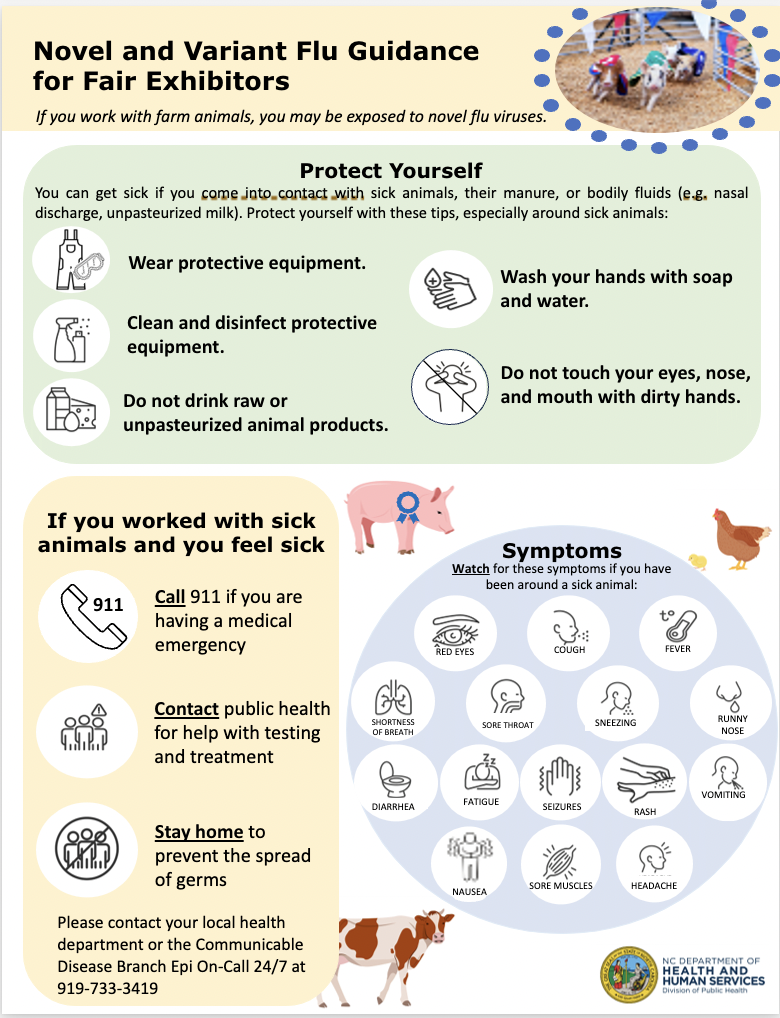
The following materials can be printed and displayed at fairs and exhibits.



Last Modified: January 27, 2026